Kosa i Lé
L'esclavage est le premier système économique mis en place à l'île de La Réunion pour soutenir la colonisation française.
Ce système a duré au moins de 1723 (application du code noir) jusqu'en 1848 (27 avril pour le vote du décret d'abolition et 20 décembre pour la proclamation effective de l'abolition) soit près de 150 ans. C'est un pan de l'histoire de La Réunion qui a marqué les hommes et les femmes, à la fois les propriétaires des plantations et les hommes et les femmes qu'ils détenaient en servilité. L'esclavage a façonné les paysages, impacté les comportements, les relations, l'âme et l'état d'esprit, l'organisation sociale, économique et la répartition des richesses. Ce crime contre l'humanité (loi du 10 mai 2001) a aussi été le contexte dans lequel ses hommes et ses femmes mis en esclavage ont été capable de résister, de lutter et surtout de créer. La nécessité de survivre, de maintenir une bonne humanité a généré une inventivité de la part des mis en esclavage qui ont créé : langue, musique, danse, chant, cuisine, manière d'être, spiritualité, système de solidarité, de santé...et une diversité de savoirs et savoir-faire
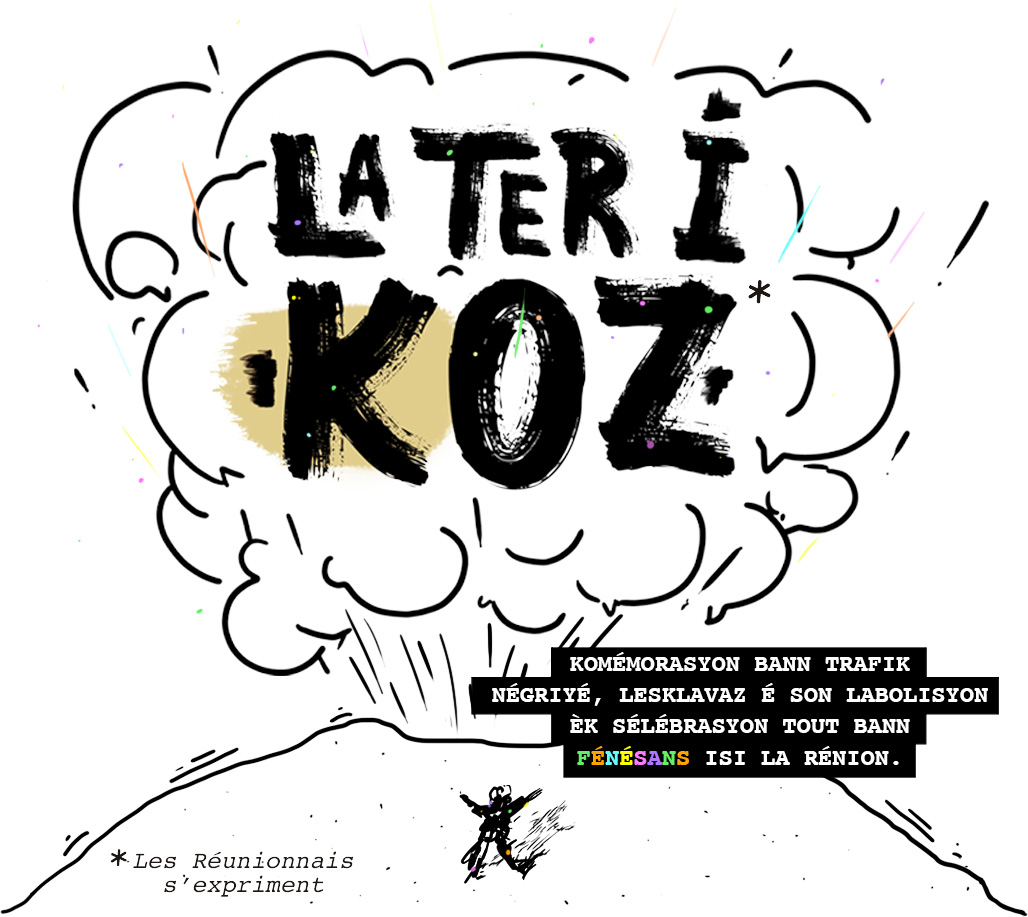
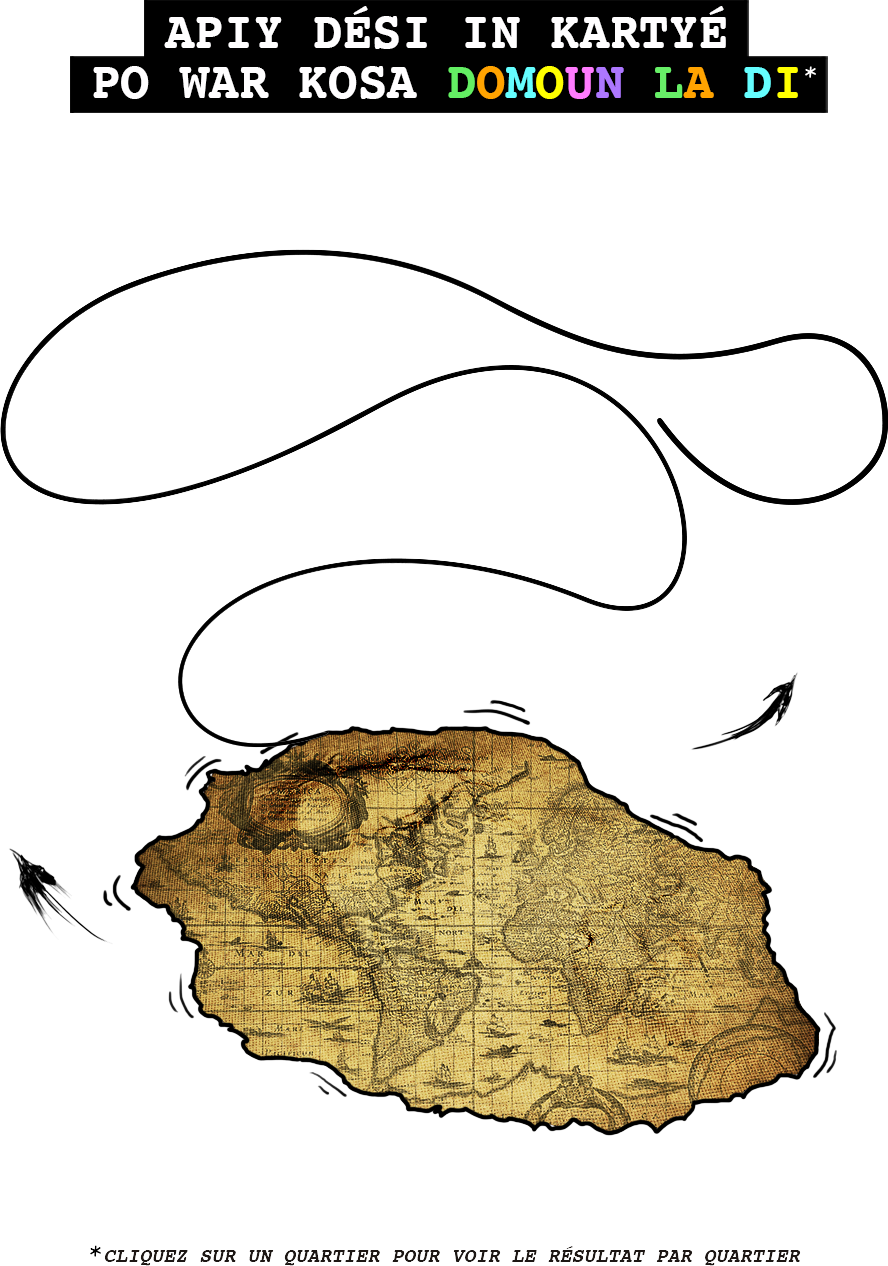
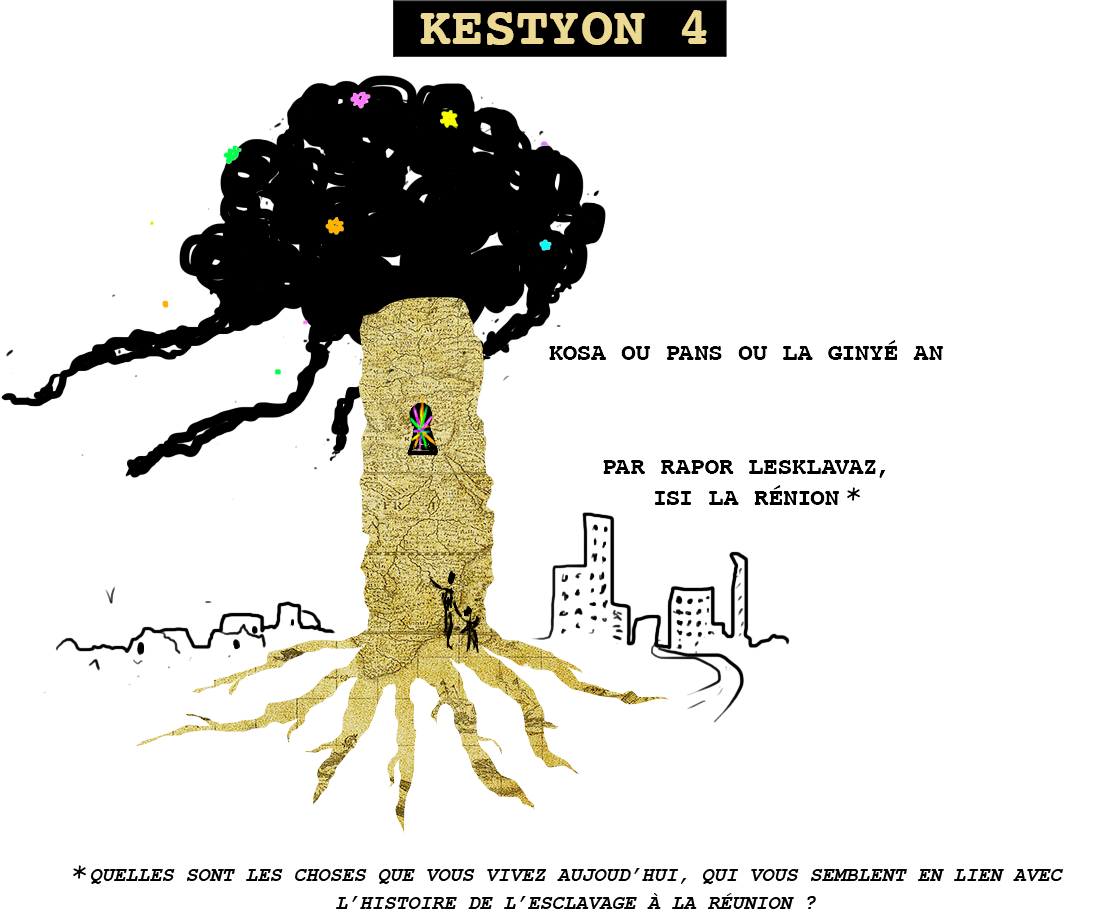
Le projet la Ter i koz a voulu écouter les Réunionnais-es des quartiers de St-Pierre pour entendre leurs paroles sur ce pan de l'histoire.
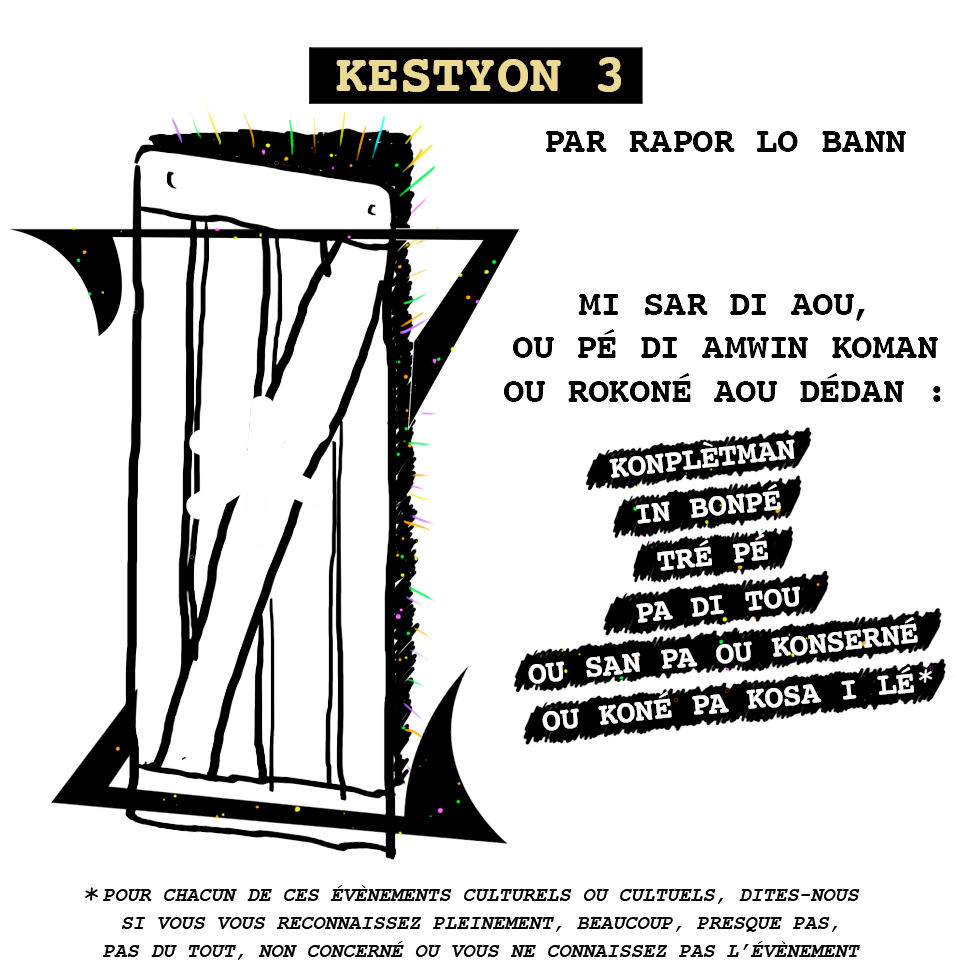
Pour chacune des quatre questions que nous leur avons posé, l'importance de leurs réponses est représentée par la taille des ballons.

-terre
-sainte
-martin
-terre
-sainte
-martin
-terre
-sainte
-martin
-terre
-sainte
-martin
Kisa nou Lé
ASSOCIATION ANKRAKÉ



 Lo groupaz kiltirel Ankraké, dopi oktob 1995, i fé tout sat li pé po mèt an l'èr lo patrimwane kiltirel
La Rénion. Sé in langazman militan po fé sat nou néna po fé. Solon Ankraké, lé pa in bon manyèr
mainé mèt dégal a égal la kiltir avèk ban zaksyon kiltirel é artistik. Po rézon, sé touzour lo minm
kalité domoun i vyin frékant lo bann landrwa ousa i fé bann spèktak. Dopi 2016, Ankraké la pran in
viraz po may la kiltir avèk travay la tèr. In manyèr war é fé po èd, sat néna lanvi, rokonstrwi azot é
trouve in lélan, in fierté, trouve in somin vi po giny pous plidvan apartir tout zot gayarsité.
Lo groupaz kiltirel Ankraké, dopi oktob 1995, i fé tout sat li pé po mèt an l'èr lo patrimwane kiltirel
La Rénion. Sé in langazman militan po fé sat nou néna po fé. Solon Ankraké, lé pa in bon manyèr
mainé mèt dégal a égal la kiltir avèk ban zaksyon kiltirel é artistik. Po rézon, sé touzour lo minm
kalité domoun i vyin frékant lo bann landrwa ousa i fé bann spèktak. Dopi 2016, Ankraké la pran in
viraz po may la kiltir avèk travay la tèr. In manyèr war é fé po èd, sat néna lanvi, rokonstrwi azot é
trouve in lélan, in fierté, trouve in somin vi po giny pous plidvan apartir tout zot gayarsité.
L'association culturelle Ankraké mène depuis 1995 des actions de valorisation, par le partage, des différents patrimoines culturels vivants, à La Réunion. C'est un engagement militant construit autour du constat que les organisations institutionnelles faisaient (font) peu en la matière et que la culture s'apparentait à une offre d'actions artistiques et culturelles inspirées des méthodes et contenus la rendant exclusivement accessible à une catégorie de la population. Depuis 2016, l'association a élargi son activité à l'agro-écologie. C'est concilier culture et agriculture propre (sans intrants chimiques) pour soutenir la construction identitaire de personnes volontaires à reprendre un chemin de vie, de projet, de fierté.
Since 1995, the cultural association Ankraké has been carrying out actions to promote, through sharing, the various living cultural heritages in Reunion. It is a militant commitment built around the observation that institutional organizations did (do) little in this area and that culture was akin to an offer of artistic and cultural actions inspired by methods and content making it exclusively accessible to a category Population. Since 2016, the association has expanded its activity to agro-ecology. It is to reconcile culture and clean agriculture (without chemical inputs) to support the identity construction of people willing to resume a path of life, of project, of pride.
Kisa nou Lé
ASSOCIATION NYABOU
 Nyabou lé né an 2016. Sé in groupaz kiltirel lé la po èd bann domoun, bann groupaz i vé aminn
otroman zot prozé, dévlop zot kapasité po giny an lotonomi, po transforme lo réel san rod po
domann siouplé, san atann dési sat i vyin pa, dési sat i done pa. Lo groupaz fine travay dési in
platforme ko-wayaz po domoun i vwa pa sansa i vwa pa tro byin, la fine réaliz osi in tiktak po èd
domoun èt otonom po zot manzé. Anpliskésa, Nyabou i aminn détrwa prozé po mié konèt sat
domoun i pans dési lesklavaz (prozé la tèr i koz), dési lo kolona é dési in métodolozi po mèt an l'èr
patrimwane vivan dann in kartyé lé mal vi.
Nyabou lé né an 2016. Sé in groupaz kiltirel lé la po èd bann domoun, bann groupaz i vé aminn
otroman zot prozé, dévlop zot kapasité po giny an lotonomi, po transforme lo réel san rod po
domann siouplé, san atann dési sat i vyin pa, dési sat i done pa. Lo groupaz fine travay dési in
platforme ko-wayaz po domoun i vwa pa sansa i vwa pa tro byin, la fine réaliz osi in tiktak po èd
domoun èt otonom po zot manzé. Anpliskésa, Nyabou i aminn détrwa prozé po mié konèt sat
domoun i pans dési lesklavaz (prozé la tèr i koz), dési lo kolona é dési in métodolozi po mèt an l'èr
patrimwane vivan dann in kartyé lé mal vi.
Créée en 2016, Nyabou est une association qui soutient les organisations, les porteurs de projets qui veulent s'engager dans les chemins de la transformation, de l'autonomie, du pilotage de leur entreprise. Elle inspire et accompagne les réalisations. A son actif, la conception d'une plate forme numérique de co-voyage, Anon war (2018), l'expérimentation d'une démarche d'alimentation autonome, la Tèr nout santé (2019) et aujourd'hui, la conduite de recherches sur la mémoire de l'esclavage, du colonat, et sur le thème “territoire et patrimoine culturel immatériel”.
Created in 2016, Nyabou is an association that supports organizations, project leaders who want to engage in the paths of transformation, autonomy, management of their business. It inspires and accompanies achievements. To his credit, the design of a digital co-travel platform, Anon war (2018), the experimentation of an autonomous food approach, the Tèr nout santé (2019) and today, the conduct of research on the memory of slavery, colonization, and on the theme “territory and intangible cultural heritage”.